How to Do Keyword Research for Vintage Jewelry
The words you use at a buying appointment are not always the words someone types into Google. A knowledgeable collector may ask about construction or a particular cut. A first-time buyer may know only that they want an older gold ring with a dark blue stone.
Keyword research for vintage jewelry connects those different descriptions with pages your business can genuinely support. The result should be a usable map of searches, intentions and destinations, not a spreadsheet full of impressive-looking numbers nobody knows how to act on.
Drawing on five years of SEO experience, GemRank SEO treats research as a merchandising decision as well as a search task. A phrase is worth pursuing when it matches both a customer’s need and what your business can offer.
Begin with a small inventory sample
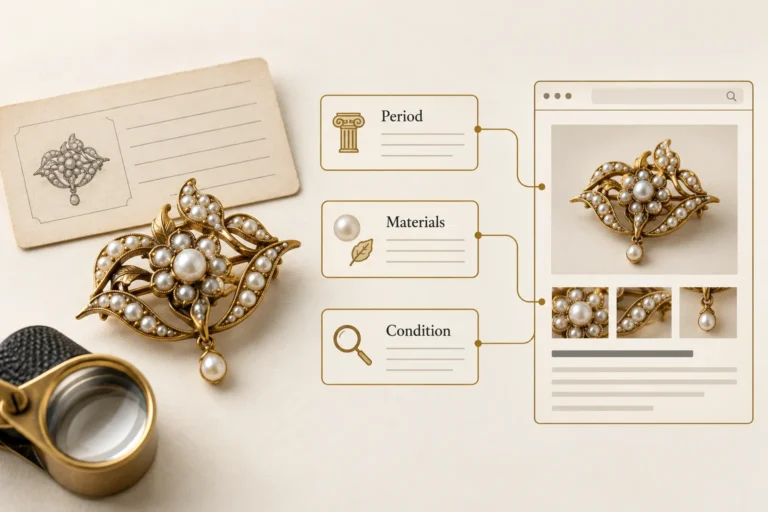
Choose a representative group of pieces and the collections you maintain regularly. Record jewelry type, documented age or decade, metal, gemstone, cut, style, size and any verified designer attribution.
Keep uncertain facts out of the keyword list until they have been resolved or accurately qualified. Research should never pressure you into calling a later reproduction an original period piece.
Next, collect language from real customer questions, inquiries and existing site searches where available. Remove identifying customer details. Look for recurring ways people describe the jewelry rather than treating one unusual message as proof of demand.
For a hypothetical vintage ring dealer, seed topics could include gold signet rings, sapphire cluster rings and vintage engagement rings. These describe inventory families; they are not yet a finished targeting plan.
Expand phrases in meaningful directions
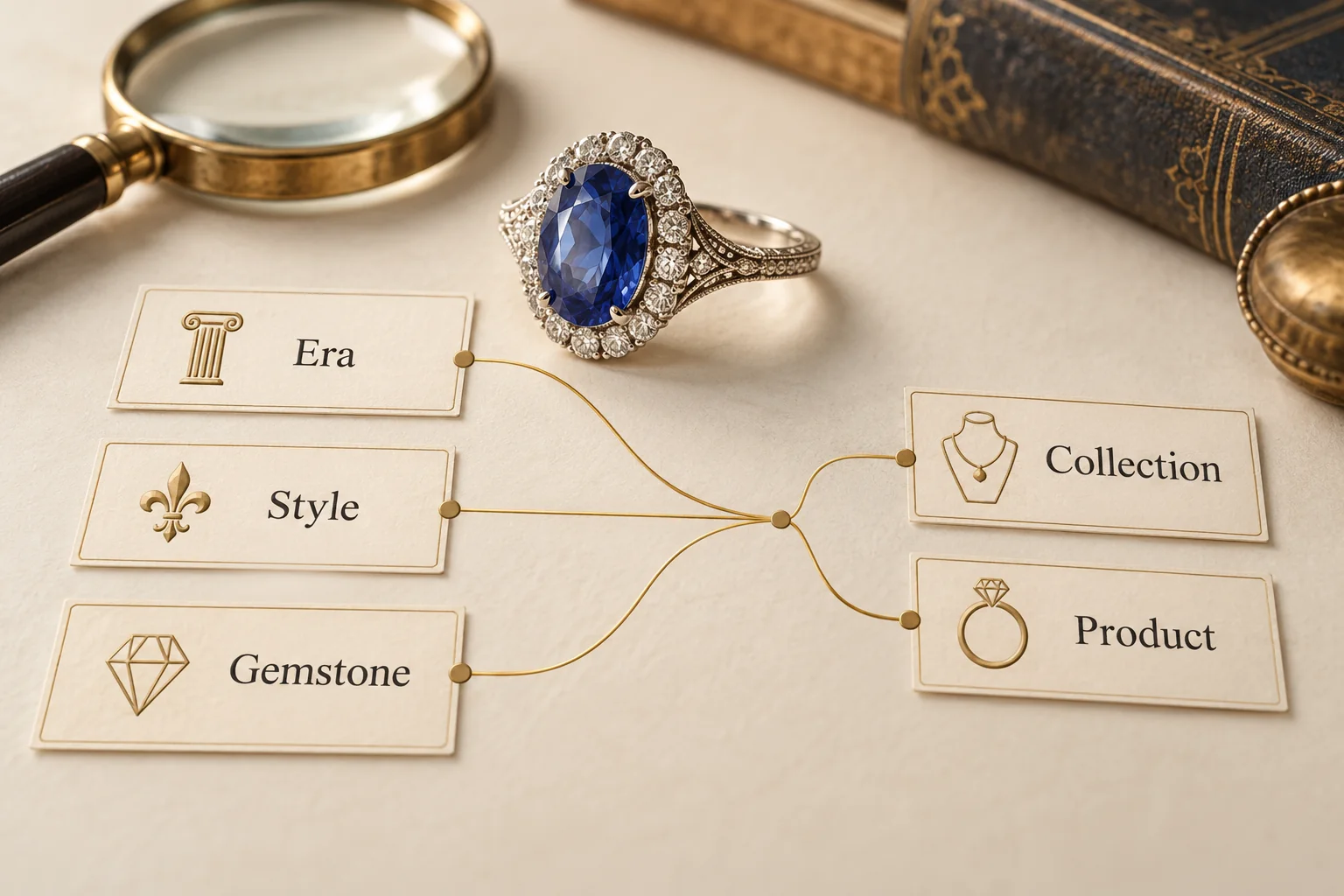
Build combinations that represent genuine shopping choices. A gemstone plus a ring type may describe a buyer’s desired piece. A question about resizing may reveal a practical concern. A period term may matter to a collector who wants a particular design vocabulary.
| Attribute | Illustrative ideas | What to check |
|---|---|---|
| Jewelry type | vintage signet rings | Do you regularly stock the category? |
| Gemstone | vintage sapphire rings | Are gemstone descriptions supported? |
| Material | vintage 18k gold rings | Is this a reliable inventory group? |
| Buyer question | can a vintage ring be resized | Can you give a careful, qualified answer? |
Do not mechanically generate every combination. “Vintage gold ring” and “vintage gold sapphire signet engagement ring” do not deserve equal attention because both can be assembled from a vocabulary list.
Inspect the search results before choosing a page
Search a candidate phrase using the intended market and note what dominates the results. Collections suggest browsing intent. Individual listings suggest a need for a particular piece. Guides suggest a question or comparison. Mixed results may justify testing more than one approach.
Record the observation and date. Search results vary with location, device and time; a result check is evidence of the current landscape, not a permanent rule.
Also notice whether “vintage” is being used for genuinely older jewelry, newly made vintage-style jewelry or both. That ambiguity affects how clearly your page must describe what you sell.
The phrase “vintage jewelry SEO” is different again: its audience is business owners seeking marketing help, not shoppers buying jewelry. Keep service keywords separate from a dealer’s retail keyword plan.
Use numbers without letting them make the decision
If you have access to a keyword platform, select the US database for a US-facing business and record the tool, date, volume estimate and difficulty methodology. These are estimates, not a forecast of visitors or sales.
Without that access, record numbers as unmeasured. Search suggestions and related questions help discover wording, but they do not establish monthly volume.
Google Search Console can reveal queries already bringing impressions or clicks to your site. Google’s Search Console introduction explains its monitoring role. Existing data is valuable, but it does not describe all possible demand, especially for a new website.
Review the page receiving the query, not just the phrase. If visitors seeking a collection land on a sold product, the opportunity may be a better destination rather than more words on that listing.
Build a keyword-to-page map
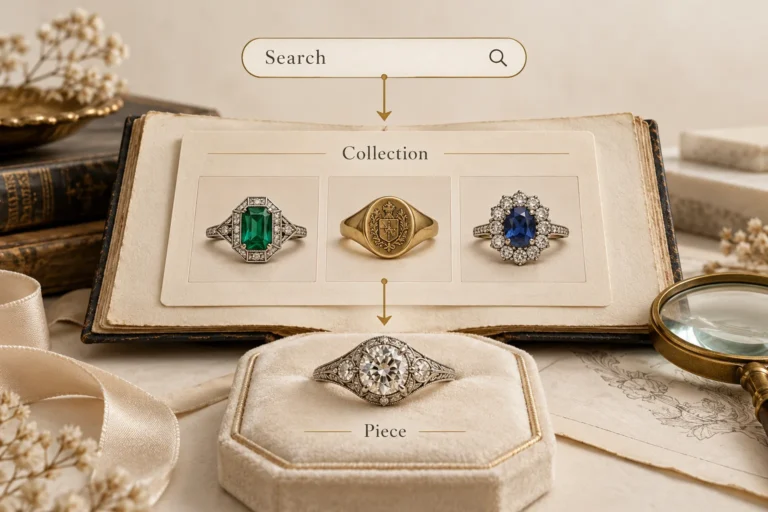
Give each important theme a preferred destination. Group close variations instead of making separate pages for every wording change.
| Theme | Candidate phrases | Preferred destination |
|---|---|---|
| Gold signet inventory | vintage gold signet rings, vintage signet rings | Maintained signet collection |
| Specific sapphire piece | vintage sapphire cluster ring, sapphire cluster ring in gold | Matching product listing |
| Resizing questions | resizing a vintage ring, vintage ring size advice | Carefully researched guide |
This hypothetical map is a planning example. Confirm the inventory and result patterns before implementing it.
Your collection can link to the sizing guide where helpful. The guide can link back to relevant available pieces. The pages then support different stages of the same decision without repeating identical copy.
Prioritize a manageable first group
Assess relevance, inventory continuity, current page quality and the work needed to make the destination useful. Add estimated demand and competition only when you have credible data.
A dependable collection with unclear copy may be a better first task than a high-volume phrase requiring stock you rarely carry. A lower-volume topic can still be valuable when it answers a recurring concern, but specificity does not automatically mean a phrase will convert.
Choose a small initial group and write down why each belongs in the plan. That protects the business from chasing every new keyword suggestion.
Place keywords where they clarify the page
Use the main topic in a clear title, heading and opening explanation. Bring supporting language into relevant product facts, collection guidance and useful questions. Shopify’s keyword guidance recommends natural phrasing in page content and key descriptive fields.
Alt text should describe the image, not carry an unrelated list of queries. A paragraph should help a person understand the page even if you remove its target phrase.
There is no useful universal keyword-density percentage for this work. If the copy starts sounding as though it is repeating instructions to a search engine, return to the buyer’s question.
Research questions for AI-assisted discovery too
Consider the fuller questions a customer might ask: “How do I compare two vintage sapphire rings?” or “What should I ask before buying an older ring online?”
Use those questions to identify information gaps, not to invent demand figures. Provide direct answers, accurate terms and helpful examples. Do not promise that a particular format will secure an AI citation.
Keep the research map alive as stock and query data change. Review whether a destination still satisfies its assigned intention before creating another page.
If you want a map your team can use in everyday listing and editorial decisions, explore our keyword and content strategy service or contact GemRank SEO.