
SPECIALIST JEWELRY SEO
Antique Jewelry SEO
Make the history easier to discover
Antique jewelry deserves descriptions that respect the piece and answer the buyer’s questions. We bring five years of SEO experience to the search research, page structure and content that help those details reach the right audience.
01 / A SPECIALIST PERSPECTIVE
The evidence behind a piece is part of its value
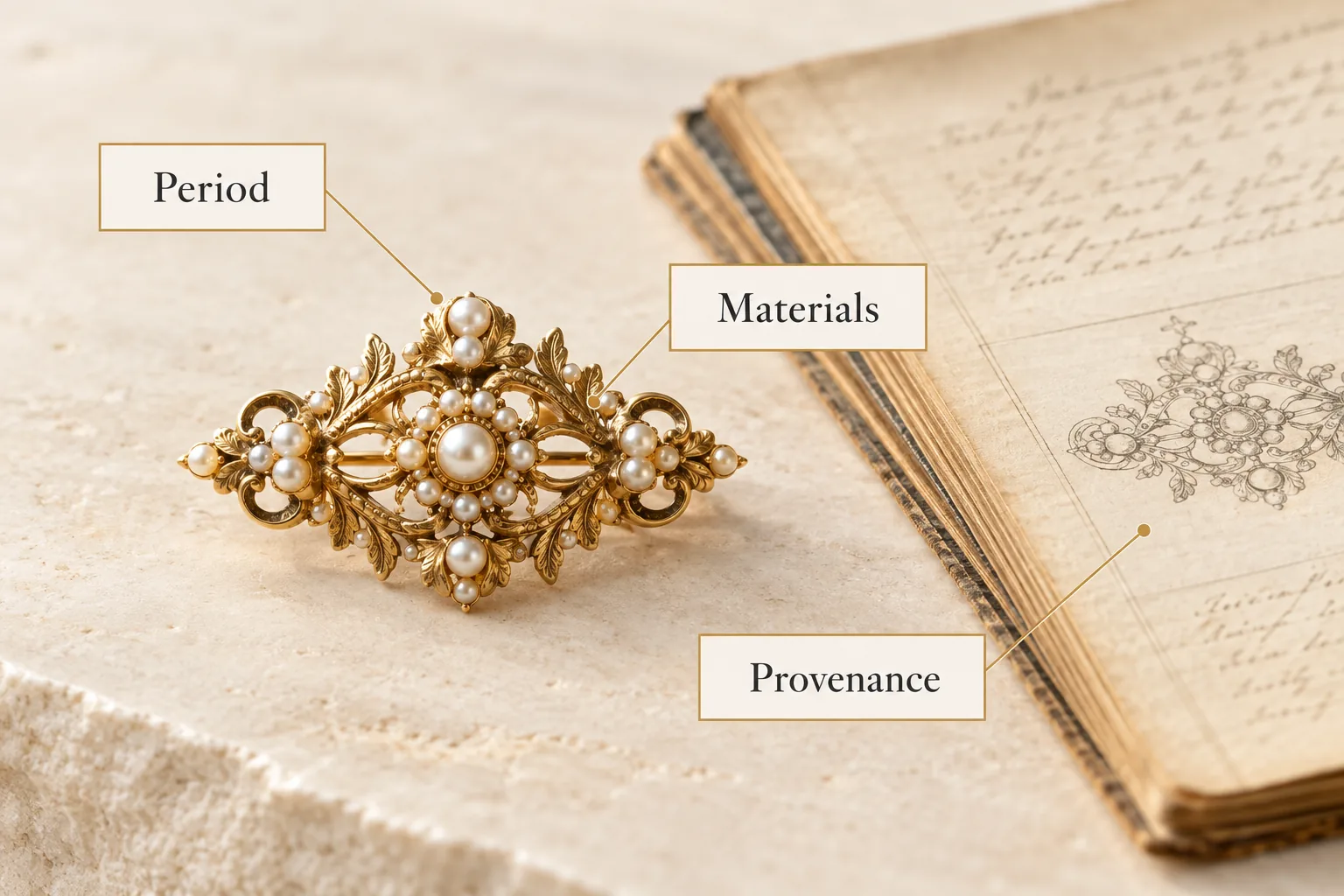
A buyer considering a Victorian brooch may want to understand its materials, condition and period before making an inquiry. A collector looking for a particular maker may approach the same website through a much narrower search.
Antique jewelry SEO connects those questions with the information your business can support. We work with your descriptions and expertise to distinguish documented facts from an attribution or estimate. A keyword should never turn uncertainty into a claim.
Your catalog can become a useful resource when its historical context is clear, its terminology is consistent and its pages offer a sensible route from research to available stock.
02 / THE SERVICE
Search strategy with room for historical detail
01 / Period and specialist search research
We investigate the terms relevant to your stock, from broad period collections to specific techniques, materials and makers. Search results help us distinguish a buying query from a question that deserves a reference page.
02 / Collection and catalog structure
We review how periods, types and specialisms are organized. The aim is a manageable set of useful collections, with clear routes between related pages and appropriate stock. We avoid creating near-identical pages for every wording of the same subject.
03 / Careful product page editing
We help organize the facts a buyer needs: materials, dimensions, condition, known alterations and any supported history. Your jewelry expertise remains the source for factual claims. We improve clarity and search alignment without inventing provenance.
04 / Historical content and internal links
A thoughtful explanation of a period or technique can help visitors understand the catalog. We plan topics that suit your expertise and connect them to relevant pieces. Sources and qualifications should remain visible where they matter.
05 / Archive and availability decisions
Some sold pieces can contribute to a useful reference archive. Others have little lasting purpose. We review availability messages, links, redirects and indexation according to the value of each page and the alternatives you can offer.
03 / THE DETAILS THAT MATTER
A useful archive should serve a visitor
Antique stock is often individual, and a sold page can still answer a collector’s question. That does not mean every unavailable piece should remain indexed forever. The decision depends on what the page contributes and whether it helps someone continue their search.
We look for clear boundaries between an archive and the current catalog. A visitor should be able to tell what is available, what is recorded for reference and where to find related pieces or ask a question.
This also protects the meaning of your collections. A period page should introduce a coherent subject, not become a miscellaneous list of items that happen to share a keyword.
04 / WORKING TOGETHER
Research first, then careful editorial work
01 / Understand the specialism
Review your catalog, historical expertise, markets and how inquiries currently arrive.
02 / Separate buying and research intent
Map the appropriate collection, product and reference destinations for relevant searches.
03 / Agree factual and website changes
Identify what needs your verification, what can be edited and where technical support is required.
04 / Maintain the catalog
Review new stock, archive decisions and available search evidence as the website develops.
05 / GOOGLE AND AI SEARCH
Make specialist knowledge understandable
Clear definitions and well-supported product information help readers and search systems understand your expertise. We review readable content, suitable structured data and consistent business details. AI search visibility remains a platform decision, so the work focuses on accurate information rather than citation promises.
A FEW GOOD QUESTIONS
Before we get started
Who is antique jewelry SEO for?
This service is for antique jewelry dealers and businesses whose catalog needs careful historical descriptions. It can suit an online dealer or a shop with an online catalog. The scope depends on your specialism, website and customer markets.
Will you write provenance or authenticate pieces?
No. We organize and edit information supplied or verified by your business. We can identify where a description needs a source or qualification, but we do not authenticate jewelry or invent a piece’s history.
Can you help with period and maker searches?
Yes, where those subjects are relevant to your inventory and supported by your knowledge. We assess the search intent and existing pages before proposing a collection, product or reference destination.
Should sold antique pieces stay on the website?
Sometimes. A page may remain useful as a reference or a route to related available stock. We assess the page individually and make its availability clear. There is no blanket rule to keep or delete every sold listing.
How do you measure progress?
When measurement is available, we review relevant queries, landing-page visits and inquiries your setup can record. We also check whether agreed changes are implemented. Rankings and sales cannot be guaranteed, and a small specialist market needs careful interpretation.
Help the right buyer find the history you know
Tell us about your antique jewelry specialism and share your website. We will discuss where clearer search research and careful page work could support discovery.