SEO for Vintage Engagement Rings
Buying an engagement ring is rarely a quick decision. Buying a vintage engagement ring adds another layer: the customer may be comparing a distinctive design, an unfamiliar cut, a fixed size and a piece they cannot replace with an identical one later.
For a dealer, SEO for vintage engagement rings should bring those decisions into the website. A visitor needs more than a grid of beautiful rings and a paragraph repeating the category name. They need help recognizing a suitable piece and understanding what to ask before buying it.
GemRank SEO draws on five years of SEO experience to connect search intent with practical buying information. The aim is relevant discovery followed by a clear, confident next step.
Define what your selection actually contains
Start with the distinction between original older rings and newly made vintage-inspired designs. If you offer both, make that difference clear in collections and individual descriptions.
The word “vintage” can attract shoppers with different expectations. Some want an older piece with documented history. Others primarily want a recognizable style. Your website should explain which need its inventory satisfies rather than allowing the ambiguity to create a disappointing inquiry.
Do not classify a ring’s age solely from its appearance. The date of the mounting, the history of the stone and later alterations may need separate descriptions. Accurate inventory facts are the foundation of the keyword plan.
Understand the buyer behind the phrase
Searches can begin with “vintage engagement rings” and become more specific as buyers learn. They may add a gemstone, metal, style, budget or practical concern.
| Illustrative search | Likely need | Useful destination |
|---|---|---|
| vintage engagement rings | Browse an available selection | Main collection |
| vintage sapphire engagement rings | Compare a narrower type | Supported collection or relevant selection |
| can a vintage engagement ring be resized | Understand a limitation | Qualified guide and item-specific information |
These examples are not measured volume data. Check current results and your own queries before creating a page. A phrase can have mixed intent, and a narrow collection needs enough relevant inventory to remain useful.
Avoid multiplying pages that all show the same rings with slightly different introductions. A clear main collection and thoughtful filters can serve buyers better than many overlapping destinations.
Make the collection a place to compare
Open with a concise explanation of what is available. Then show the rings. Put deeper guidance where it can help without delaying the browsing experience.
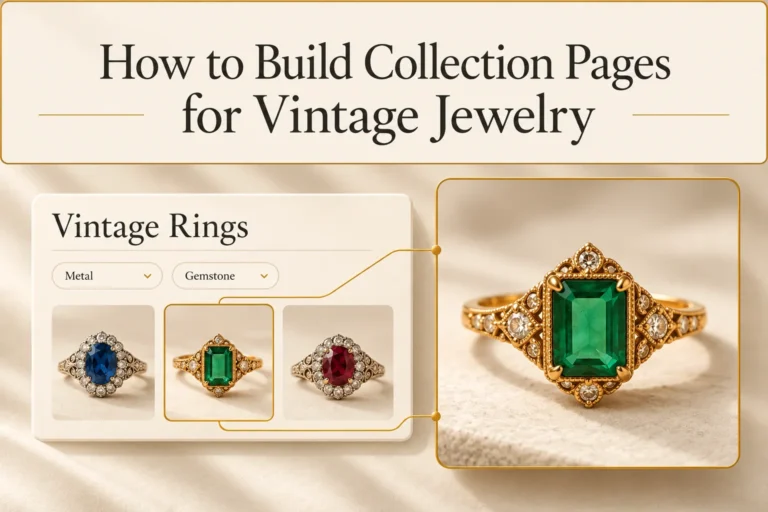
Useful product cards can show the actual item name, price, availability and a distinguishing detail where the design allows. Filters should reflect information you maintain accurately, such as gemstone or metal. Do not offer a filter that produces misleading results because your product data is inconsistent.
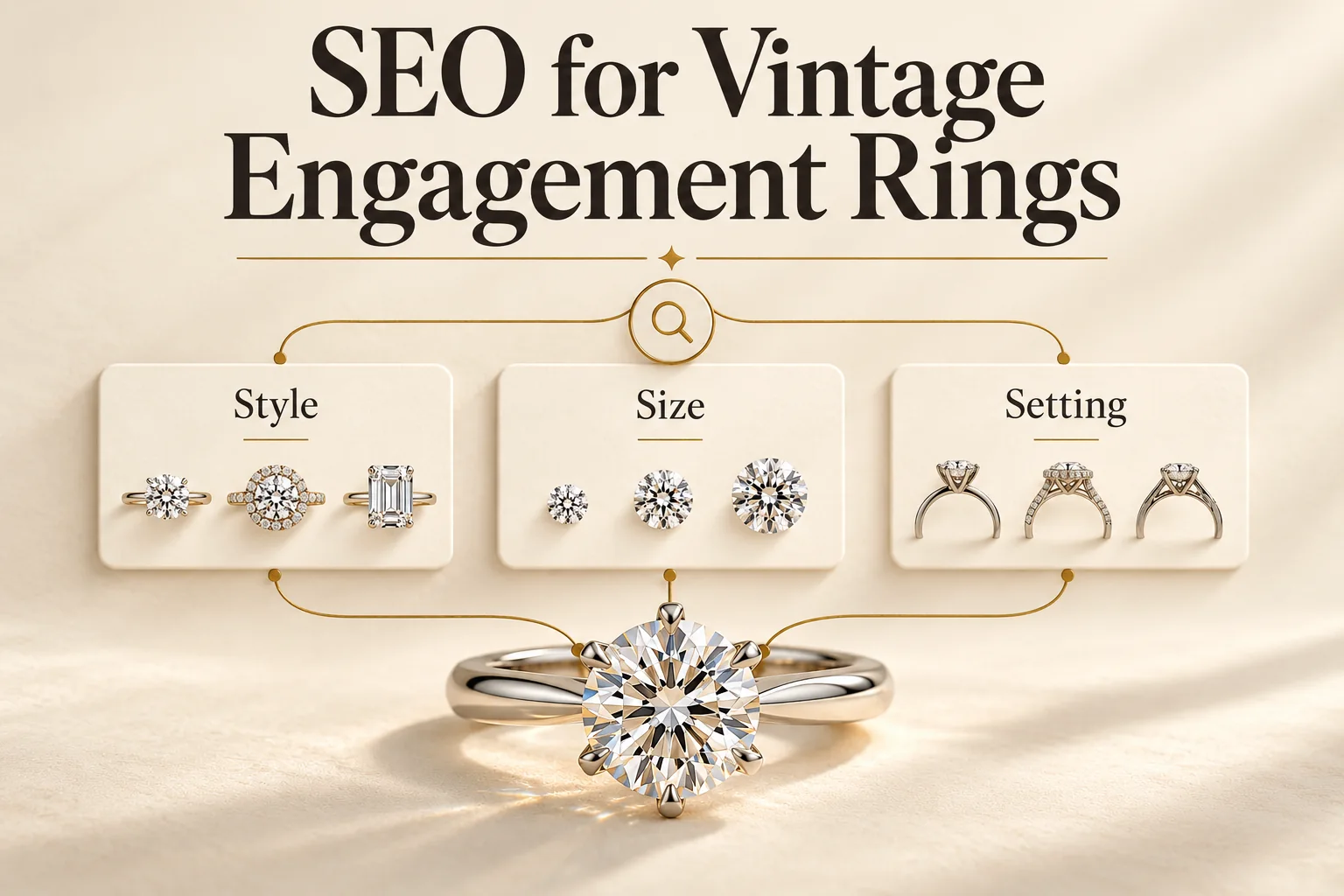
Consider how shoppers compare pieces with different ring sizes. A visible size field can save them repeated clicks. Explain whether resizing needs individual assessment rather than suggesting every ring can be changed freely.
A reassuring collection is one where a visitor can see both possibilities and limitations before becoming emotionally invested in a particular piece.
Use each product page to reduce uncertainty
For a hypothetical documented listing, “Vintage Sapphire and Diamond Engagement Ring in Platinum” may describe the item more usefully than an inventory nickname alone. Include only supported facts.
Explain the setting, dimensions, ring size, condition, stone information and known alterations. Separate documented details from estimates. Photographs should show the overall ring, side profile and relevant wear, with enough clarity to understand what the words refer to.
A fictional FAQ might ask: “Can this ring be resized to my size?” The answer should reflect an actual assessment or invite a qualified assessment before purchase. Do not replace that judgment with a blanket statement that resizing is always possible.
Our product and collection SEO service considers this handoff from comparison to item-specific information.
Explain specialist terms without overwhelming buyers
An experienced collector and a first-time buyer may reach the same page. Define the terms needed to compare the ring, then provide a route to deeper information.
For historical diamond cuts, GIA’s antique and vintage engagement ring guide provides context on old mine and old European cuts. A cut description alone should not be treated as proof of the mounting’s age.
Keep the product page focused on its actual stone and supporting documentation. A general cut guide can answer broader questions, while the listing makes clear what is known about this ring.
Support the purchase decision with useful content
Choose articles based on questions customers genuinely ask. These might concern comparing settings, understanding descriptions, ring fit or viewing a one-of-a-kind piece remotely.
A guide should answer the question before directing the reader to inventory. If every paragraph leads into a sales pitch, the person still has to look elsewhere for help.
Link to a relevant collection when the connection is useful. Keep older guides updated when purchasing policies or stock categories change. Do not link a buyer repeatedly to sold rings unless the archive is clearly explained.
Give sold rings an appropriate next step
When a ring sells, decide whether its page remains useful as an archive. If it does, mark it sold prominently and show relevant available alternatives. Avoid leaving an active purchase invitation beside an unavailable piece.
A buyer may like a particular shape but be open to a different stone. Comparable alternatives can help them continue browsing. An unrelated product recommendation does not solve the disappointment.
Keep the collection current. A page that appears full of options but leads mainly to unavailable inventory makes search traffic harder to serve.
Review the mobile path and search information
Test the journey from collection to listing to inquiry on a phone. Check that important facts are readable and photographs do not push the first useful information far below the fold.
Where your platform provides product structured data, review its actual output. Google’s merchant listing guidance describes eligibility and validation. Product facts should match the visible listing; never invent ratings or identifiers.
Clear descriptions and helpful answers also support AI-assisted discovery. They do not guarantee that a search system will recommend a ring or cite your website.
Measure relevance, not just reach
Review queries, collection visits and genuine inquiries or purchases when tracking is available. Consider whether visitors are finding the type of inventory you sell and whether stock changes explain a change in results.
An engagement ring inquiry can involve several visits and questions. Judge the usefulness of the journey, not only the first click.
If your rings are distinctive but the website does not explain their differences clearly, explore our vintage jewelry SEO service or tell us about your inventory. Search should help a buyer reach the right questions and the right piece.