SEO for Antique Engagement Rings
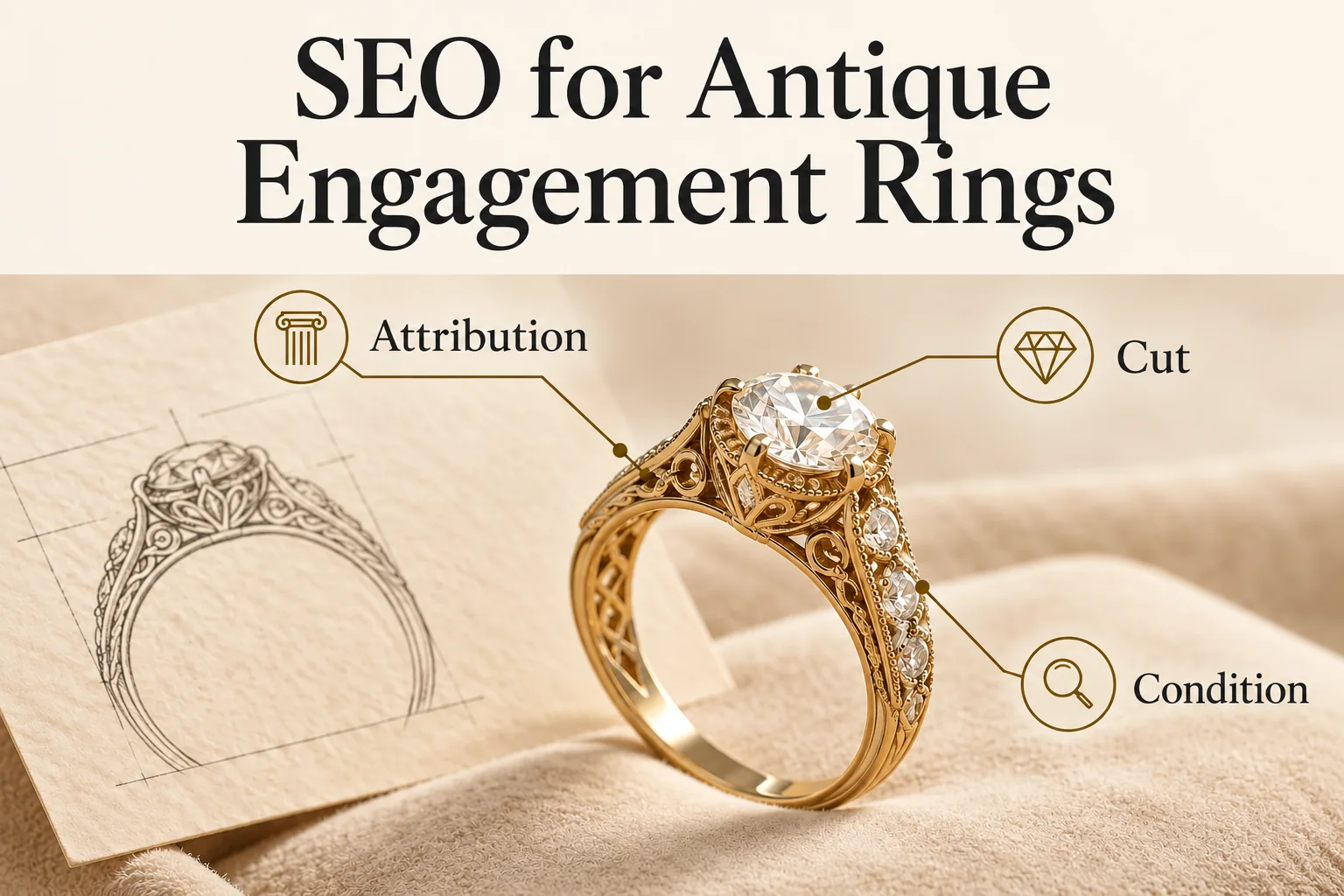
An antique engagement ring can invite a buyer into a world they know very little about. They may love its shape before they understand its period, construction or condition. They may also worry about making an expensive mistake.
SEO for antique engagement rings works best when discovery and explanation stay connected. The page that attracts the visitor should help them understand what is documented, what remains uncertain and what they need to ask about this particular ring.
At GemRank SEO, five years of SEO experience shape our emphasis on useful, precise information. For antique inventory, stronger search copy should make a description clearer without making an attribution sound more certain than the evidence allows.
Keep age, style and stone history separate
“Antique,” a period name and an old diamond cut are related subjects, but they are not interchangeable descriptions of a ring.
A later mounting can contain an older stone. A newly made ring can imitate a historical design. A ring may have repairs or replacements that deserve disclosure even when its principal attribution is sound.
GIA’s guide to antique and vintage engagement rings discusses historical cuts and the need to consider component changes. Use appropriate references and the actual assessment of the piece rather than treating a style label as authentication.
From an SEO perspective, this means choosing keywords after establishing the facts. Do not select a lucrative period phrase and then stretch the product description to fit it.
Map searches to the kind of answer needed
A person searching “antique engagement rings” may want a dealer’s available selection. Someone asking about an old cut may want a comparison. A person searching a very specific combination could be looking for inventory or learning whether such a ring is suitable.
Search the candidate phrase, examine current results and record the likely intention. The pattern can change, and the wording alone does not tell the whole story.
| Illustrative theme | Appropriate role |
|---|---|
| Antique engagement rings | Main shopping collection |
| Supported period and ring type | Focused collection when stock justifies it |
| Old-cut diamond questions | Sourced educational guide |
| Specific documented ring description | Individual product listing |
This is a hypothetical planning framework, not a keyword-volume report. It helps avoid assigning every related phrase to the homepage or creating collections with no dependable inventory.
Design a collection that helps cautious buyers
Explain what your selection contains and how descriptions are presented. Then let visitors see the rings without passing through a long historical introduction.
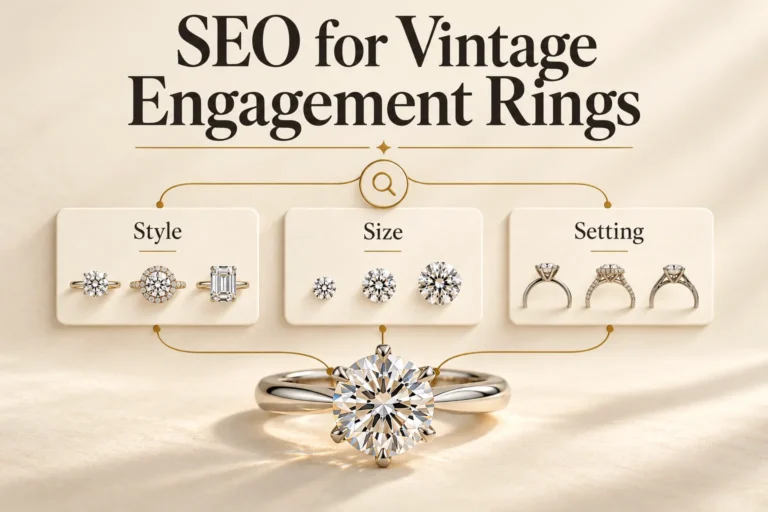
Choose comparison details that matter: supported attribution, stone description, metal, size, availability and price where relevant. Keep the card layout readable rather than squeezing every specification into a thumbnail.
If several period collections show the same small selection, consider whether the structure is helping anyone. A broader maintained collection with useful browsing controls may provide a better experience.
Make educational links optional and well placed. Someone ready to inspect a ring should not be forced into a lesson, while someone unfamiliar with a term should be able to understand it.
Show the reasoning behind a listing
Imagine a fictional ring whose mounting has a qualified period attribution and a documented diamond description. A clear listing would state those separately, describe condition and identify any known changes.
It would not automatically imply that the diamond, mounting and every small component have remained together since manufacture. Nor would it treat a gemstone report as proof of the full ring’s historical origin.
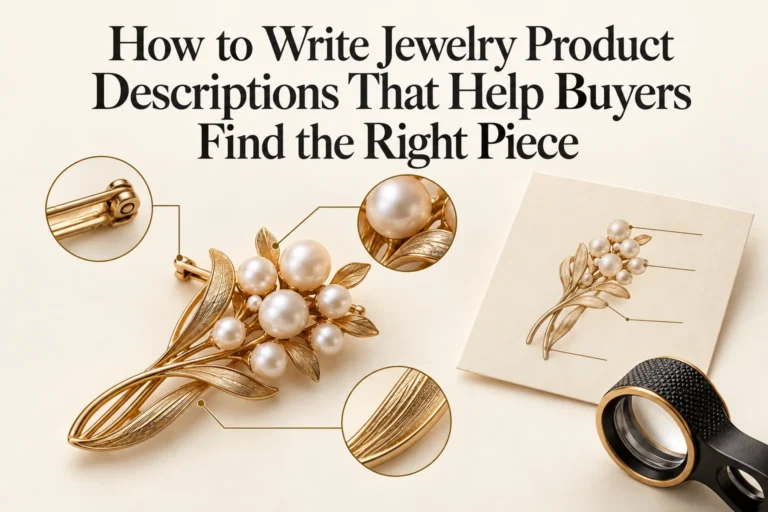
A product title should lead with supported identifying information. “Antique Diamond Engagement Ring With Openwork Shoulders” is clearer than “The Heirloom,” but a precise period name belongs only when justified.
Our antique jewelry SEO service treats those editorial decisions as part of building useful search visibility.
Answer condition questions before they become objections
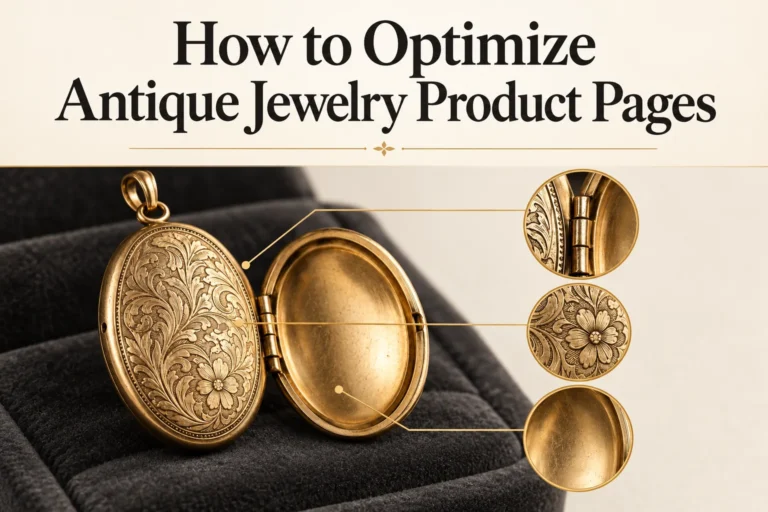
Condition can be difficult to communicate because a buyer may interpret ordinary age-related wear differently from a dealer. Use clear descriptions and corresponding photographs.
Show the side profile, setting, shank and any relevant marks or alterations. Explain known repairs accurately. Discuss sizing and suitability through qualified assessment rather than assuming a historic ring is ready for every pattern of daily wear.
For a hypothetical question, “Has the shank been replaced?” the useful answer is the actual documented position. If it is unknown, say that. If work is known, describe it and show the relevant area. Avoid filling the gap with a confident marketing sentence.
These disclosures can make an inquiry more productive. The buyer can ask about the unresolved decision instead of first discovering information that should have been on the page.
Make evidence accessible without overstating it
If you refer to a report or document, explain what it covers. Provide an appropriate readable view where you are entitled to share it, while protecting private owner details.
Different evidence answers different questions. A photograph of a mark, a gemstone report and a dealer’s attribution are not substitutes for one another. Organize them around the claims they support.
For historical education, cite reliable specialist references. Avoid copying the wording of auction or dealer descriptions and presenting it as your own research. A careful summary with attribution is more useful than borrowed authority.
Keep the website technically consistent
Check that important listings are accessible through relevant collections and ordinary links. Ensure price and availability agree across the visible page and the information output by your platform.
Google’s product structured data overview explains product search features. Eligibility is not a guarantee of display. Reviews, ratings and identifiers should represent genuine information, not fields filled for appearance.
When a ring sells, update the page and collection promptly. A useful archive should say it is sold and direct a visitor toward suitable available pieces or an accurate inquiry option.
Write for detailed AI-assisted questions too
People may ask a search system to compare ring types or explain an unfamiliar description. Clear sections, direct answers and accurate attribution make your information easier to understand.
Do not write every answer as if it were universally applicable to all antique rings. The useful response may be that suitability depends on the actual setting and condition. That limitation is part of expertise, not a weakness to remove from the copy.
Choose a focused improvement plan
Review the main antique engagement rings collection and several representative listings. Check naming, attribution, photographs, condition disclosures and the route to contacting the business on mobile.
Record the changes and assess relevant search queries and qualified inquiries where data is available. Distinguish interest in period education from interest in available inventory before deciding which content to expand.
If a page attracts attention but leaves buyers unsure what they are looking at, more traffic alone will not solve the problem. Contact GemRank SEO to discuss a search strategy that respects the knowledge behind your inventory and the seriousness of the purchase.