
SPECIALIST JEWELRY SEO
Jewelry Keyword & Content Strategy
Turn search research into useful pages
A keyword list only becomes useful when it explains what to build, improve or leave alone. With five years of SEO experience behind our approach, we connect jewelry search research to a practical page map and content priorities.
01 / A SPECIALIST PERSPECTIVE
The question behind the phrase matters
Someone asking about an old European cut diamond may be learning, comparing or searching for a piece to buy. The wording gives a clue, but the search results and context help us decide which page can serve that person well.
We research the language relevant to your inventory, specialism and markets. Then we separate queries that belong together from subjects that need distinct pages. We also look at what already exists, so a new article is not the automatic answer to every opportunity.
The result should tell you what a page is for, who it helps and how it connects to the rest of your website.
02 / THE SERVICE
From relevant searches to an editorial plan
01 / Search discovery and intent review
We combine your inventory and customer questions with search-result research. Where reliable keyword or Search Console data is available, we use it with its source and date recorded. We do not invent search volumes or treat volume alone as a priority.
02 / Query grouping and page mapping
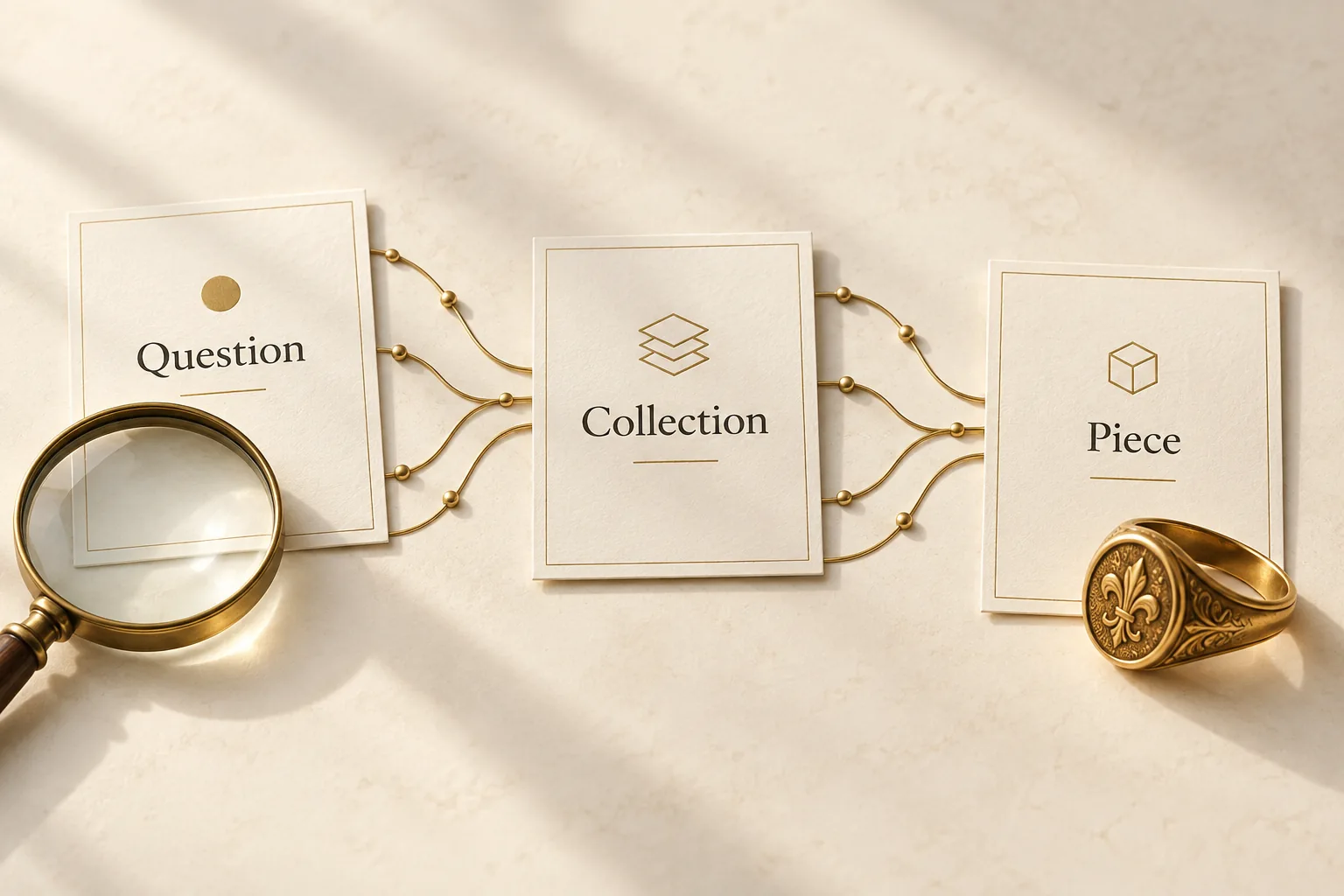
Related phrases are grouped by subject and intent. Each group receives an appropriate destination, such as a collection, product, guide or existing service page. The map identifies overlaps so several pages are not given the same purpose.
03 / Existing content review
We assess pages that could be improved, combined or made easier to reach. Useful existing work should not be replaced just to publish something new. We note what to preserve and what needs factual or editorial attention.
04 / Content briefs grounded in expertise
A brief defines the audience, question, page role, heading structure, supporting details and relevant links. It also identifies facts your team needs to supply. The writing should sound like your business rather than a rearranged search-results page.
05 / Priorities your business can maintain
We propose an achievable sequence based on relevance, current gaps, available stock and effort. Research remains separate from measured performance, and missing data stays visible. Your buying plans and resources help determine what happens first.
03 / THE DETAILS THAT MATTER
Publish because the page has a reason to exist
A good jewelry guide can clarify a cut, explain a setting or answer a buying question. It should contribute something useful from your knowledge and direct readers to relevant next steps. Repeating what is already on several other pages adds little value.
We also look for questions best answered inside an existing collection or product page. A separate article is only one option. The right destination depends on the reader’s need and the content the business can support.
For a specialist catalog, a smaller set of accurate, maintained pages can be more workable than a long publishing schedule. We agree the priorities and review what the evidence shows as content goes live.
04 / WORKING TOGETHER
Keep research connected to decisions
01 / Understand the business
Review your stock, expertise, audience, markets and existing content.
02 / Research the language
Explore relevant phrases, buyer questions and the page types appearing in search.
03 / Map and brief
Assign page roles and create clear briefs with factual inputs and meaningful links.
04 / Review the evidence
Use available query and landing-page data to refine the next editorial priorities.
05 / GOOGLE AND AI SEARCH
Answer clearly without writing for a formula
Direct explanations, meaningful headings and supported facts help a page serve readers and search systems. We account for questions people may ask in AI-powered search, while keeping each page coherent and useful. There is no promised answer length, keyword density or citation formula.
A FEW GOOD QUESTIONS
Before we get started
Do you provide keyword research without a full SEO retainer?
We can discuss a focused research and content strategy project. The deliverables and implementation responsibilities are agreed before work starts. The scope depends on your catalog, website and available data.
Will you include search volume and keyword difficulty?
If a reliable data source is available for the project, we can include its estimates and date. Those metrics vary by tool and market. We do not manufacture figures or present estimates as exact customer demand.
How do you decide between a guide and a collection page?
We assess the meaning of the search, the results currently serving it and what your inventory can offer. A buying query may need a collection. A question may need a guide or a useful explanation on an existing page.
Will the content be specific to my business?
Yes. Briefs are grounded in your stock, audience and expertise. We identify the details your team must verify and aim for natural writing. We do not invent product facts, reviews or customer stories.
Can you plan content for AI search too?
Yes. We consider clear explanations and accurate source information alongside traditional search intent. Those foundations can support discovery, but an AI platform chooses its answers and sources. Citations cannot be guaranteed.
Give your next page a clear purpose
Tell us what you sell and share your current website. We will discuss the searches, questions and existing pages that should shape your content plan.