SEO for One-of-a-Kind Vintage Jewelry
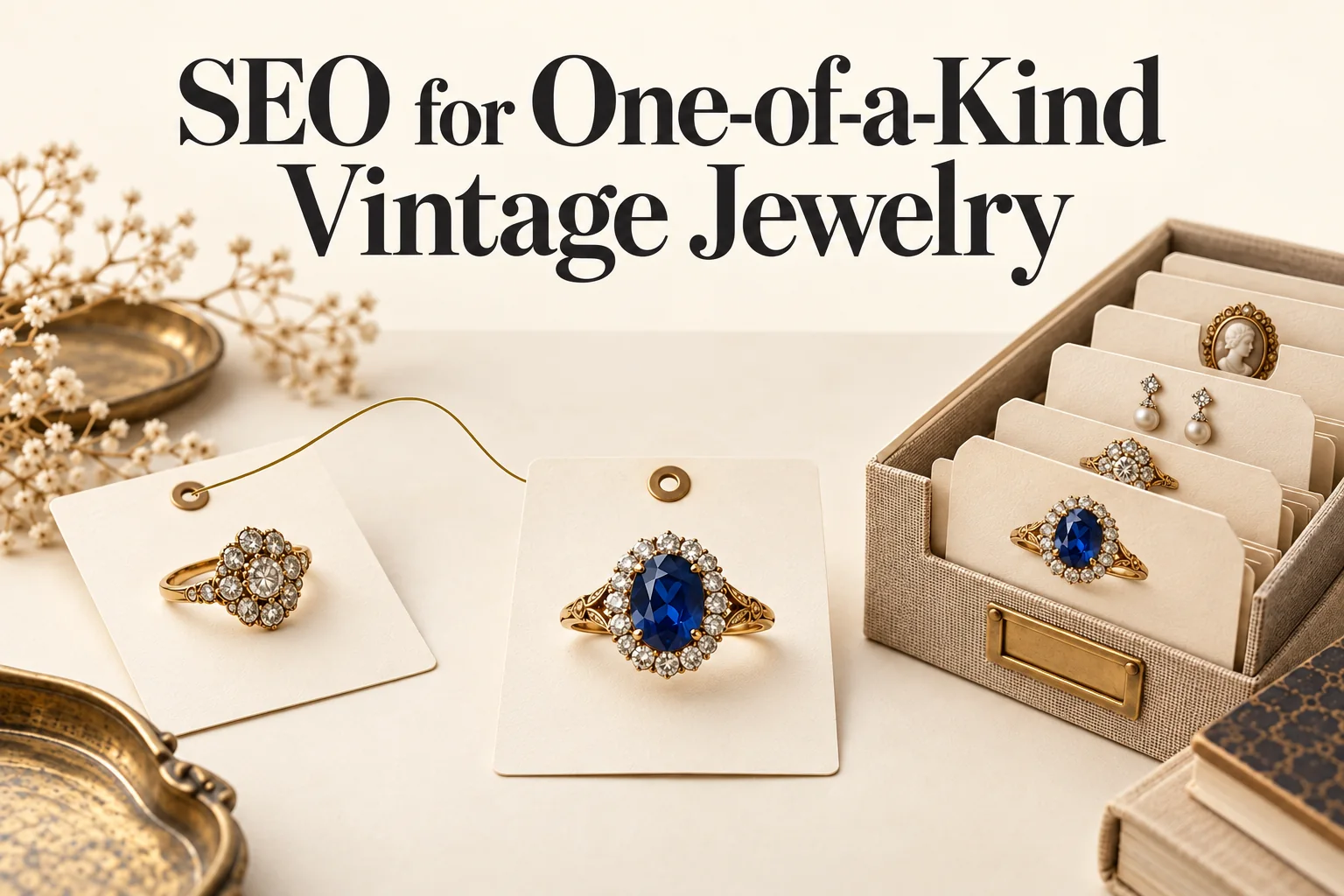
You photograph a ring, check its details, write a thoughtful listing and finally find its buyer. Then the piece leaves your inventory. For a vintage jewelry business, that is a successful sale. For a website built entirely around individual products, it can also mean losing the page that was beginning to attract attention.
SEO for one-of-a-kind vintage jewelry works best when the business has destinations that outlast a single piece. Your products should be discoverable while available, but collections, reference content and carefully maintained archives need to carry the longer conversation. This guide explains how to organize that work around the rhythm of sourcing and selling.
Give permanent and temporary pages different jobs
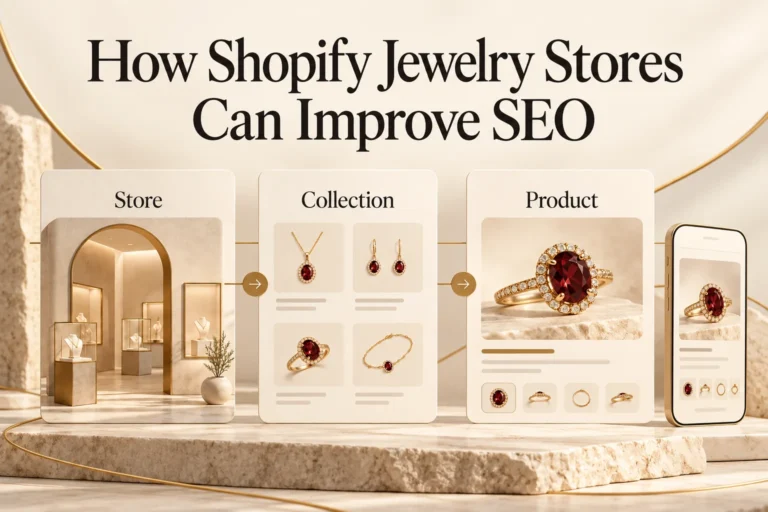
A product page answers a precise question: is this particular piece right for me? A collection answers a broader one: what can I choose from here? Neither page should try to do everything. A visitor who wants to compare vintage signet rings needs a selection. Someone who has found your engraved oval signet needs the size, condition and photographs of that exact ring.
Treat the collection as the lasting destination and the product as an individual opportunity within it. Keep a collection only when you have a credible sourcing commitment or another useful reason to maintain it. A permanent URL is not enough if the visitor repeatedly finds an empty grid.
Google recommends navigable links from categories to products in its ecommerce structure guidance. For a small dealer, the practical application is simple: a new piece should have a route from a relevant collection as soon as it goes live.
Build a sourcing map before a keyword list
Begin with what you expect to sell repeatedly over the next year. This is a planning exercise, not a promise about future stock. Write down your reliable areas, occasional finds and pieces outside your usual expertise. These distinctions stop the website from growing around searches you cannot consistently serve.
For example, a dealer who regularly sources gold lockets but rarely handles mourning jewelry may need one useful vintage lockets collection. A dedicated mourning lockets destination might be premature. The occasional piece can still have an accurate, detailed product page without creating an entire new category.
Add buyer language beside each sourcing area. Use inquiries, on-site searches and available Search Console queries. A term suggested by a tool is a research candidate until you check the search results and your inventory. Do not call it high volume or low competition without actual measurements.
Make the intake process do part of the SEO work
The easiest listing to improve is the one that starts with complete information. Create a single intake record that follows the piece through photography, description writing and publication. Include the product identifier, supported materials, measurements, condition, available documentation and the intended collection.
Keep uncertain details visibly separate from confirmed ones. An estimated date should not become an exact year as the record moves between people. Likewise, a seller’s attribution should not silently become your own verified identification. Accuracy needs to survive every copy-and-paste step.
Assign the page a stable, descriptive address once. Avoid rebuilding its URL whenever you refine a title. Put the main distinguishing details in readable copy and use descriptive image text for what each photograph actually shows. The objective is a complete listing that can be published efficiently, not an elaborate keyword ritual.
A hypothetical week in a small vintage inventory
Imagine that three pieces arrive on Monday: a sapphire cluster ring, an engraved gold locket and a garnet brooch. The example is illustrative, not a client result. Each item receives its own product record, but the website work depends on the collections already available.
| Piece | Immediate destination | Lasting connection |
|---|---|---|
| Sapphire cluster ring | Accurate individual listing | Existing vintage sapphire rings collection |
| Engraved gold locket | Listing with open and closed views | Existing lockets collection and relevant size guide |
| Garnet brooch | Listing with fastening and condition details | Brooches collection, without an unsupported period category |
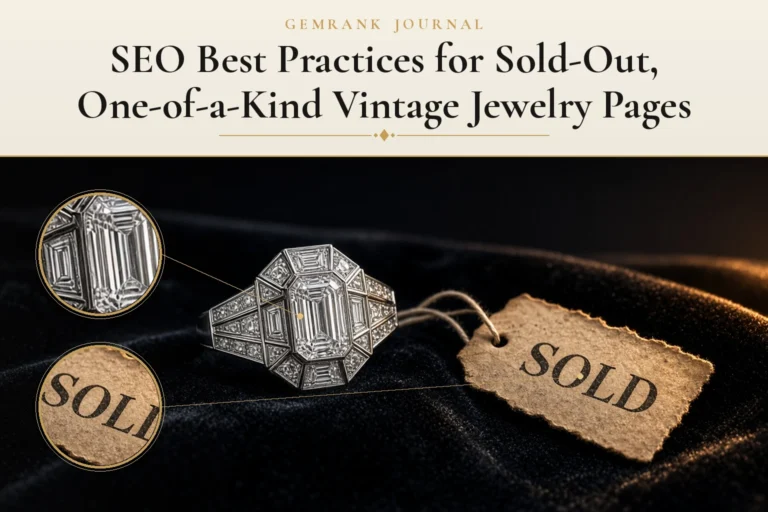
If the sapphire ring sells on Thursday, the collection does not disappear. Its product card changes according to your sold-item policy, and other available rings remain accessible. The sold listing may retain a clear archive role if it still helps visitors. What matters is that a successful sale does not require dismantling the useful browsing structure around it.
Decide the sold-page policy before the first rush
Make availability changes part of the sales workflow. Someone should update the purchase control, visible status, product information and any connected inventory feed. A visitor should never have to discover that a ring is sold only after trying to buy it.
Do not automatically redirect every sold URL to the homepage. First consider whether the page still has useful photographs, search visits, links or reference value. An honest archive can explain the sold piece and offer relevant alternatives. A genuinely replaced page may justify a redirect. An obsolete page with no useful replacement can be removed with an appropriate response.
These are different decisions. Write down who makes them and what evidence they use. A monthly review of exceptional pages is usually more manageable than expecting every sales assistant to make an SEO judgment during checkout.
Keep guides connected to the stock you can serve
Write reference content around recurring customer questions, not every interesting piece that passes through your hands. A useful explanation of locket dimensions may support many future listings. A generic history article with no relationship to your business can become another maintenance obligation.
Use examples with care. An archived product can illustrate a feature, but label it as sold and make the distinction from current inventory obvious. Link readers to a collection only when it genuinely helps them take the next step. The visitor should understand why the link is there.
Clear descriptions also make the site easier to interpret in AI-assisted discovery. Keep important facts in accessible text and distinguish examples from stock. There is no need to turn every small product variation into a separate explanatory article or promise that an AI platform will recommend it.
Measure continuity, not just individual winners
Review your collections alongside the products. When measurement is available, look at relevant search queries, collection visits, routes into available pieces and inquiries. A sold product losing purchase activity is expected. The more useful question is whether visitors can still discover appropriate stock through the surrounding pages.
Keep a short change log. Record when a collection was revised, a product sold or an archive was removed. Without those notes, ordinary inventory changes can look like mysterious SEO problems. Compare like periods where possible and account for a changing mix of pieces before attributing a movement to one edit.
Start with one repeatable category
Choose a category you know well and expect to keep sourcing. Check the collection, inspect five product records and follow the experience of one sold item. Fix those connections before expanding the method across the site.
Drawing on five years of SEO experience, GemRank SEO approaches changing inventory as an operating reality to plan around. Our vintage jewelry SEO service connects that planning with the pages customers actually use. For the wider foundation, read our practical vintage jewelry SEO guide, or tell us about your inventory.