What AI Search Means for Independent Jewelry Brands
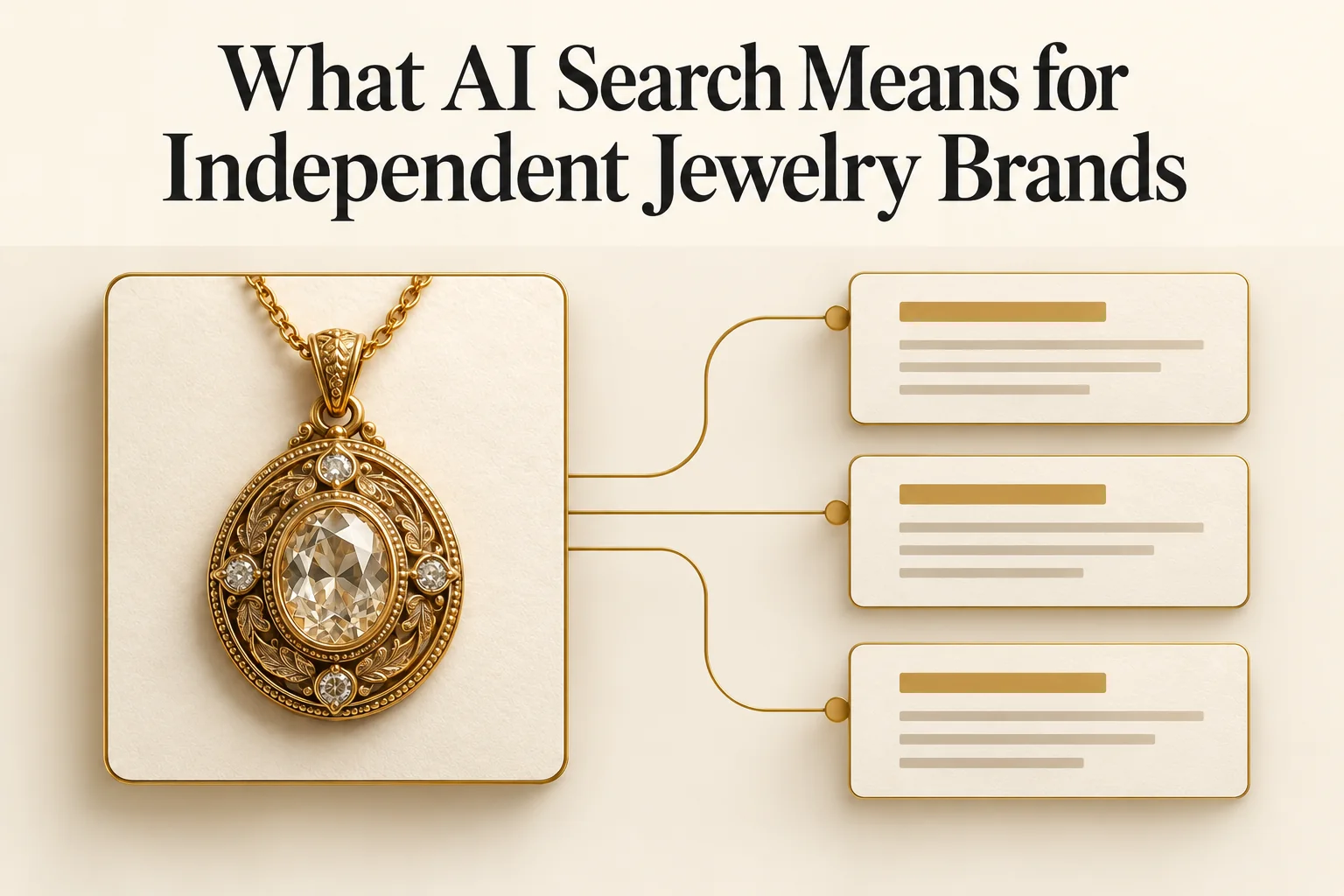
A customer no longer has to begin with a neat product phrase. They can ask for a ring that feels distinctive, sits comfortably beside a wedding band and comes from an independent business. An AI-assisted search experience may respond with explanations, suggestions and links before the customer visits a store.
For an independent jewelry brand, the useful response is to make the business easier to understand and evaluate. AI search does not remove the need for good product information, a usable website or a credible reason to choose your pieces. It raises a practical question: what could a person or search system learn about you from the information you have actually published?
Understand the difference between discovery and a sale
Being mentioned in an answer, receiving a website visit and making a sale are separate outcomes. A brand reference may bring awareness without a click. A visitor may explore a collection without buying. A purchase may happen later through a different route that your reporting cannot fully connect.
Set expectations around those distinctions. A screenshot of one favorable answer is evidence of that answer at that moment, not a reliable measure of your overall visibility. Results can vary with the question, location, platform and context. Treat repeatable observations as a research input rather than a guaranteed ranking position.
The same discipline applies to proposals from suppliers. Ask what will change on the site, why it helps customers and how progress will be assessed. A promise to make your brand appear in every relevant AI recommendation is not something a consultant can control.
Publish the facts a careful customer would ask for
Start with the business itself. Explain what you specialize in, who is responsible for the work and how someone can contact you. Distinguish an original designer, a vintage dealer and a retailer carrying other makers. Those are different businesses with different evidence to offer.
Then inspect product pages. Can a visitor understand the materials, dimensions, availability, condition and purchase terms? Are important qualifications in readable text or buried in an image? If you offer custom work, explain the actual process and what requires a conversation rather than suggesting every design is immediately available.
This is especially important for jewelry because attractive language can hide meaningful differences. A vintage-inspired design and a documented period piece may share visual features but should not be presented as interchangeable. Clear wording helps a customer understand which question your business can answer.
Use a question map with a commercial purpose
Collect questions from inquiries, consultations and customer service. Separate questions about choosing a piece from questions about buying from you. The first group might involve fit or design. The second may concern shipping, returns, appointments or the documents supplied with a purchase.
| Customer question | Useful source on your site | Evidence to include |
|---|---|---|
| Will this ring sit beside a band? | Individual product page | Side-profile photographs and an honest fit explanation |
| Do you sell original vintage pieces? | About page and product descriptions | Clear sourcing approach and item-specific attributions |
| Can I see the piece before ordering? | Contact or appointment page | The real viewing options and how to arrange them |
These hypothetical examples show how to choose a destination. They are not a list of prompts guaranteed to generate traffic. If a question needs a product-specific answer, a generic FAQ cannot replace it.
Give explanations enough context to stand alone
Write a direct answer, then explain the limits. If resizing depends on the setting and condition, say that before inviting the customer to ask about a particular ring. Avoid a sweeping statement that could be misleading when read without the surrounding paragraph.
Use descriptive headings and keep related facts together. A reader should not need to combine five unrelated pages to understand a central claim. At the same time, do not repeat a large block of identical explanatory text across every product just to make each page longer.
Original photographs, demonstrations and carefully described examples can make your expertise easier to assess. Label illustrative material clearly. A generated ring image can explain a concept, but it cannot serve as evidence of the construction or condition of a piece you are selling.
Keep the technical work grounded
Google’s current guide to generative AI search keeps established SEO foundations central and says special AI files or dedicated schema are not required for its search features. Check its current eligibility and Search Console guidance when implementing changes, since platform controls can evolve.
For your own site, ask a developer or SEO specialist to confirm that important content can be accessed, useful pages are eligible for indexing and internal links lead to the intended destinations. Check the live page, not just a completed field inside the store’s editor.
Product information should agree across visible copy, structured data and any connected merchant feed. Do not leave a sold ring appearing available in one system while the storefront says otherwise. Technical clarity is an ongoing maintenance task, particularly for a changing vintage catalog.
Build a small observation routine
Choose a few genuine customer questions and record why each matters. Note the date, platform and exact wording when reviewing an answer. Record whether your business was mentioned, whether a link appeared and whether the description was accurate. Keep these observations separate from website analytics.
Where reporting is available, examine referral visits and useful actions on the landing pages. Also review the platform’s own current reporting documentation. A missing referral label does not prove that no customer encountered your business through AI, and an increase in visits does not establish which website change caused it.
Most independent businesses do not need a complicated daily prompt-testing program at the outset. A periodic review tied to actual website improvements is more manageable. Spend the greater share of your time making the information worth discovering.
Avoid turning uncertainty into more content
It is tempting to publish a separate article for every wording of a question. That approach can leave the site with many thin pages and no stronger answer. Combine closely related questions when they help the same reader make the same decision.
Likewise, do not ask an AI writing tool to supply missing product facts. A confident sentence about a gemstone treatment, maker or origin still needs evidence. Use writing assistance to organize verified information, then have the person who understands the piece review the result.
Drawing on five years of SEO experience, GemRank SEO treats AI discovery as part of a wider search strategy. Our AI SEO and GEO service focuses on practical improvements and honest measurement. Start by choosing one important product or buying question, making its answer clearer and connecting it to the right page. If you would like help deciding where to begin, share your website with us.